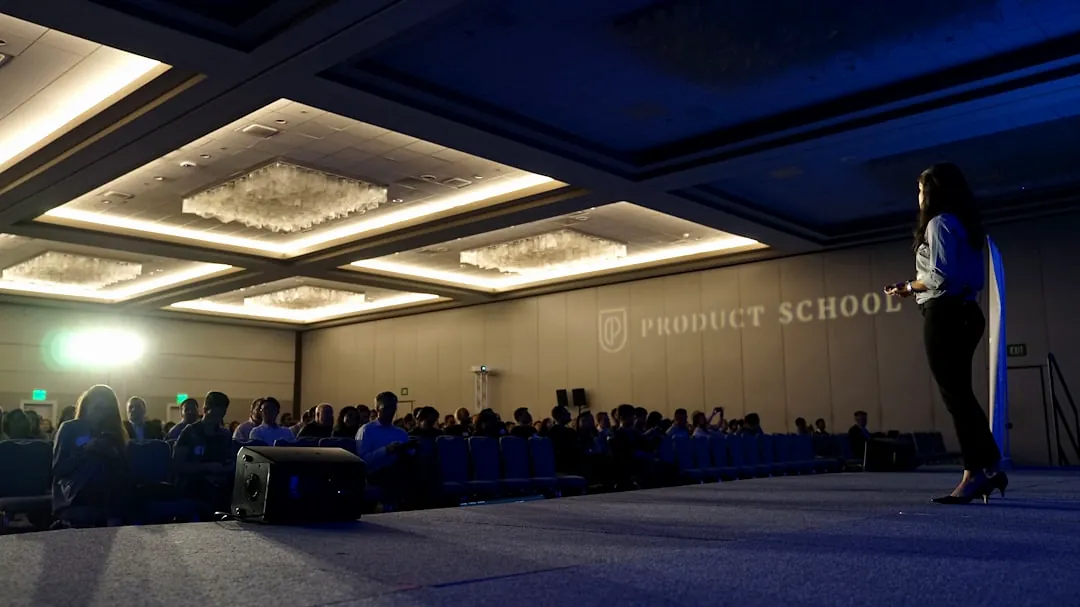

GTC 2026: Nvidia’s concrete pivot from training hype to inference infrastructure
Nvidia’s GTC 2026 keynote focused less on speculative future AI fantasies and more on practical infrastructure for inference-heavy, agentic workloads—new hardware, an open agent stack, and targeted demos that make clear what Nvidia is trying to sell and what will actually be tested in the market next.
Announcements at GTC that change the deployment conversation
At GTC 2026 Jensen Huang foregrounded an “inflection point for inference,” not a reprise of training-era grandiosity: announcements included DLSS 5 for game upscaling, the Vera Rubin Ultra data-center family with a new Vera CPU, the open-source NemoClaw agent stack, and a robotic Olaf demo built with Disney and DeepMind tech.
Those items are concrete in different ways: DLSS 5 is a software feature arriving in games, Vera Rubin Ultra is a hardware platform claiming specific scale (up to 144 GPUs) and CPU efficiency gains, NemoClaw is a codebase enterprises can trial, and the Olaf robot served as a realism check for conversational limits in robotics.
Infrastructure claims, trade-offs, and engineering constraints
Nvidia said the Vera CPU doubles efficiency and is about 50% faster than “traditional CPUs” in targeted workloads, and that Vera Rubin Ultra can scale to 144 GPUs—claims meant to justify continuous inference for agents rather than episodic training bursts.

The company also pitched Vera Rubin Space-1, a space-deployed data center concept that immediately raises engineering constraints: without conduction or convection, cooling must rely on radiation, a nontrivial redesign of thermal management that Nvidia confirms is under active engineering work but without a public timeline.
| Announcement | Primary purpose | Readiness / timing | Clear adoption checkpoint |
|---|---|---|---|
| Vera Rubin Ultra + Vera CPU | Scale inference for agent fleets; lower token cost | Hardware preview at GTC; Vera Rubin Ultra expected in 2027 | First commercial clusters and published power/perf per token benchmarks |
| NemoClaw (open source) | Enterprise agent stack with privacy, sandboxing, OpenShell | Announced open-source release; adoption depends on integrations | Enterprise deployments with audit logs and sandbox attestations |
| DLSS 5 | AI upscaling melding 3D structure with generative models | SDK and partnerships rolling to developers; mixed reception among gamers | Visible improvements in released titles and developer testimonials |
| Vera Rubin Space‑1 | Proof of concept for space-based compute | Active engineering; no timeline | Successful thermal prototypes or a hosted demonstration |
NemoClaw, DLSS 5 and the Disney Olaf demo—ecosystem signals, not just marketing
NemoClaw extends OpenClaw with sandboxing, privacy controls, and OpenShell integration; Huang compared its potential ecosystem role to HTML or Linux, which signals Nvidia wants broad third-party adoption rather than a closed, proprietary stack.
That ambition matters because software controls whether the Vera Rubin scale actually translates to secure, auditable multi-agent deployments; enterprises will judge NemoClaw by integration points (identity, audit logs, sandbox attestation) and by whether partners publish hard security reviews after initial deployments.
DLSS 5 aims to fuse structured 3D scene data and generative techniques to improve material and lighting fidelity, but reception from players has been mixed—some criticized its value in already high-fidelity titles such as Resident Evil: Requiem—so developer uptake will be the real test for its claimed leap in photorealism.
The Olaf robot demo, built with Disney Research and the Newton Physics Engine co-developed with DeepMind, showed strong simulation and motor control advances but also illustrated conversational shortcomings during Huang’s onstage interaction; that gap underscores a pattern: perception and control advances are ahead of robust, general conversational inference for real-world agent autonomy.
What will actually prove Nvidia’s pivot—and what to watch next
Nvidia set a measurable runway: watch for the commercial release of Vera Rubin Ultra systems (expected 2027), enterprise NemoClaw deployments with security attestations, and independent benchmarks that compare cost-per-inference token versus current Blackwell or third-party alternatives.
Regulation and procurement practices are part of the equation—Huang framed Nvidia as covering a third of global AI compute together with partners like Anthropic and Meta and projected over $1 trillion in demand through 2027; if customers cannot validate performance or auditors raise governance flags, adoption could slow despite scale.
Short Q&A
When will we see Vera Rubin Ultra in customer data centers? Nvidia targets 2027 for Vera Rubin Ultra; intermediate indicators will be commercial cluster announcements and benchmarked power/perf metrics.
How will enterprises validate NemoClaw? Look for integrations with identity and audit tooling, sandbox attestations, and third‑party security audits before wide production use.
What’s a warning sign that this is mostly marketing? If Nvidia provides only simulated or internal benchmarks without independent comparisons of cost-per-token and real-world multi-agent orchestration tests, adoption signals will likely lag keynote rhetoric.
