
If procurement is unified, Anduril’s $20B Lattice deal becomes the Army’s counter‑drone backbone through 2036
The U.S. Army has awarded Anduril Industries a firm-fixed-price contract worth up to $20 billion to deploy its AI-enabled Lattice command-and-control platform, integrating hardware, software, data, and sustainment into a single enterprise vehicle that replaces more than 120 prior procurement actions and runs through an estimated 2036 completion date.
Consolidation in practice: the contract terms that change buying
The contract is structured as a five-year base period with a five-year option, managed by the U.S. Army Contracting Command at Aberdeen Proving Ground, Maryland. It is not a one-off purchase: funding and work locations will be determined per individual order under this umbrella, and the vehicle explicitly aims to centralize acquisitions previously scattered across dozens of buys.
This consolidation matters because it shifts from transaction-by-transaction buys toward an enterprise agreement that can accelerate fielding cadence. The firm-fixed-price nature sets cost expectations while the long horizon to 2036 allows iterative software upgrades, phased hardware rollouts and recurring interoperability testing instead of repeated procurement negotiations.
What Lattice brings: platform, persistent sensors, and a systems layer

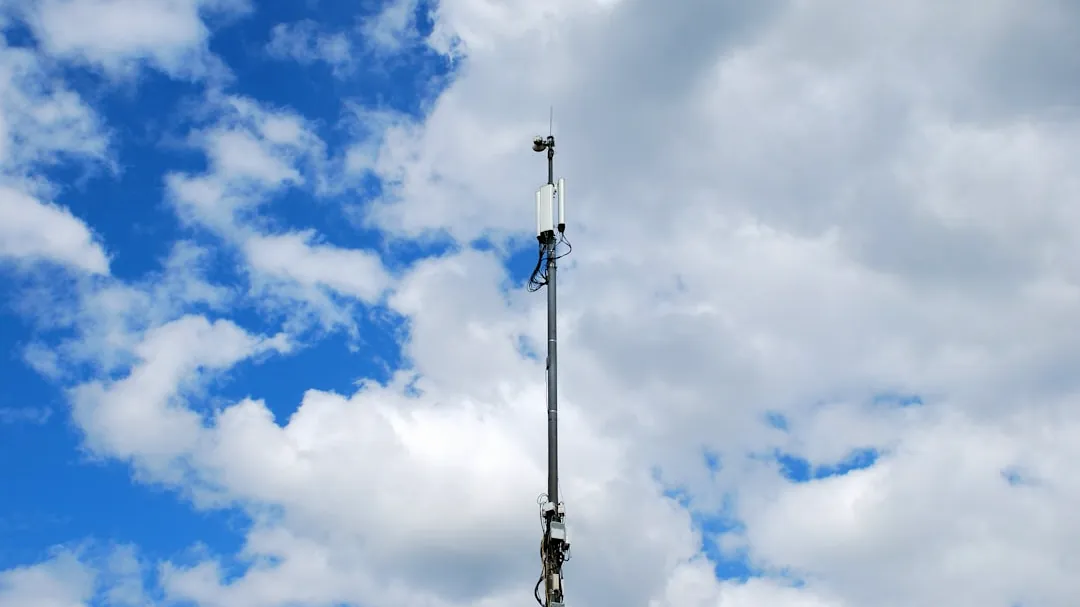
Lattice is an open-architecture, AI-enabled command-and-control system that Anduril positions as the backbone for counter-unmanned aerial systems (UAS) and broader operational support. The agreement covers software, integrated services, and hardware such as Anduril’s Long Range Sentry Tower for persistent surveillance and threat identification.
| Component | Primary function | Near-term checkpoint |
|---|---|---|
| Lattice (software layer) | AI-enabled C2, sensor fusion, shared battlespace picture | Interoperability tests with legacy Army systems and JIATF‑401 integration trials |
| Long Range Sentry Tower | Persistent surveillance, detection/ID for counter‑UAS | Deployment to priority sites and sustained operational evaluations |
| Data & infrastructure | Secure data flows, cloud/edge compute, maintenance | Supply‑chain audits and cybersecurity conformity checks |
How agencies will use a unified C2 for counter‑drone efforts
Army-led Joint Interagency Task Force 401 will use Lattice as a backbone for multi-agency drone defense coordination, enabling data sharing and faster decision loops between military and federal partners. That creates a concrete operational shift: instead of piecemeal counter-UAS tools, agencies will route detection, attribution and response through a common platform with AI-assisted prioritization.
This multi-agency role reflects lessons from recent conflicts — Ukraine and Middle East engagements where proliferated drones changed engagement tempo — and from domestic incidents like near-miss incursions around U.S. installations that prompted temporary airspace closures. Putting Lattice at the center is meant to reduce bureaucratic delay in fielding capabilities, but it also concentrates integration, governance and supply‑chain scrutiny on a single vendor and platform.
Checkpoints to watch before calling it the backbone
Whether Lattice truly becomes the operational backbone depends on several measurable checkpoints: successful integration with legacy Army and joint systems, the pace at which AI-enabled features are fielded under the contract, and routine cybersecurity and supply-chain reviews. The Army expects iterative upgrades over the contract’s life, which puts emphasis on software release cadence as much as hardware deliveries.
Anduril’s corporate position matters too — founder Palmer Luckey remains a visible figure, and the company reported roughly $2 billion in revenue last year while exploring financing that has been reported to value it near $60 billion. That growth trajectory gives Anduril capacity to scale, but it also draws regulatory and public attention to governance, vendor concentration and how the Pentagon balances speed with oversight.
Q&A: immediate reader questions
When does this start producing fielded capabilities? Orders under the vehicle can begin immediately, but broad reach will depend on phased rollouts and interoperability tests; expect noticeable deployments at prioritized sites first.
Is this purely a hardware buy? No — the contract packages Lattice as an integrated systems layer (software, data, infrastructure) paired with hardware like the Long Range Sentry Tower; treating it as only hardware is a misread.
What are early warning signs it’s not working? Missed integration milestones with joint systems, repeated supply-chain or cybersecurity findings, or a slow cadence of AI feature delivery would be key red flags to monitor.
