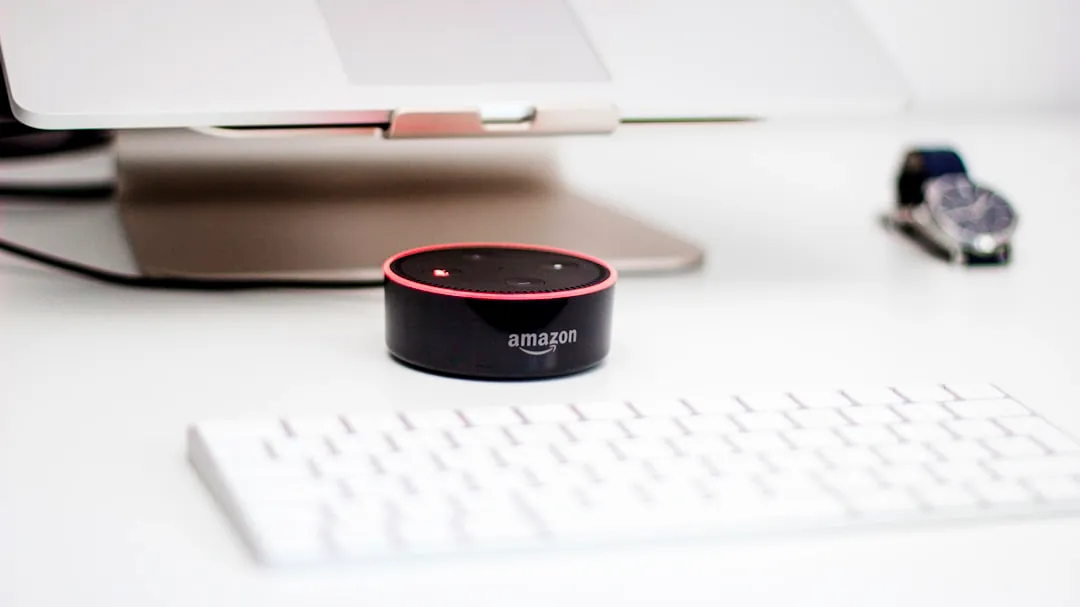

Get ready for the whisper-filled office of the future
Voice interaction is moving from a niche input to an operating layer in offices: a measurable trust signal (Jabra + LSE) and LLM-driven context are pushing spoken commands from convenience to workflow orchestration within the next few years.
The measurable trust shift and who’s actually adopting
Jabra and the London School of Economics found a 33% increase in trust for AI when users give instructions orally instead of typing them, a concrete signal that voice feels more natural and reliable to many people. That study, combined with pilots across enterprises, underpins claims that voice-first interfaces could reach broad workplace adoption within roughly three years rather than remain a niche experiment.
That signal also upends a common assumption: adoption isn’t only a youth trend. TELUS Digital surveys report faster uptake and stronger loyalty among older users, while younger employees use voice more selectively and expect finer accuracy. In short, the adoption vector is about workflow fit and user expectation, not simple demographics.
How voice is being used now and the technology that makes it work
Modern voice stacks pair local audio processing with large language models to read context, handle follow-up commands and correct earlier instructions without forcing users to restart an interaction. That combination lets voice do more than transcribe: it assigns outcomes (summarize, update a board, file a record) and drives multi-step workflows spanning calendars, conferencing, CRM, and on-premise devices.
| Environment | Dominant uses | Primary constraints | Governance checkpoints |
|---|---|---|---|
| Home office | Continuity (summaries, follow-ups), hands-free task lists | Ambient privacy, family devices | Local processing, user opt-ins, retention limits |
| Shared office / open floor | Room controls, non-sensitive commands | Identity leakage, accidental activation | Room-level scopes, explicit auth for sensitive tasks |
| Mobile / field | Hands-free logging, on-site checks, post-call summaries | Network variability, background noise | Edge-first processing, secure sync, MFA for actions that change records |
Concrete deployments already show the pattern: clinicians dictating notes while keeping patient contact, warehouse staff confirming picks without stopping equipment, and sales teams converting call audio into CRM entries. Platforms like Talk&Comment add accessibility features—captioning, adaptive transcription—that expand use for neurodiverse or mobility-impaired employees, demonstrating how voice can be both productivity and inclusion infrastructure.
Where claims overreach and the governance trade-offs organizations must accept
Voice won’t instantly replace screens or human review for sensitive decisions. The overstated claim is that voice is simply a convenience; the stronger reality is it enables new forms of automated work that require stricter governance. As voice agents gain permission to modify records or trigger approvals, enterprises must balance productivity gains against risks of accidental activation, unauthorized access, and cloud exposure of audio.
Practical decision lens: treat voice rollouts like any workflow automation—pilot on low-risk processes, require explicit authentication for actions that touch PII or financial records, enforce short retention windows, and prefer local/edge processing where latency and exposure are concerns. The next checkpoint to watch is whether organizations can scale these safeguards as voice access expands to highly sensitive datasets and autonomous task execution.
Short Q&A
When should teams pilot voice? Start with administrative, low-risk tasks (meeting summaries, scheduling actions) and measure error rates, user trust, and privacy incidents over a 6–12 week window.
What’s a quick privacy red flag? Any solution that streams raw audio to third-party cloud services by default without clear retention and access controls.
Who will lead adoption? Expect mixed early adopters: TELUS Digital’s findings show older employees often adopt and stick with voice tools faster than younger cohorts, who use voice more selectively.
