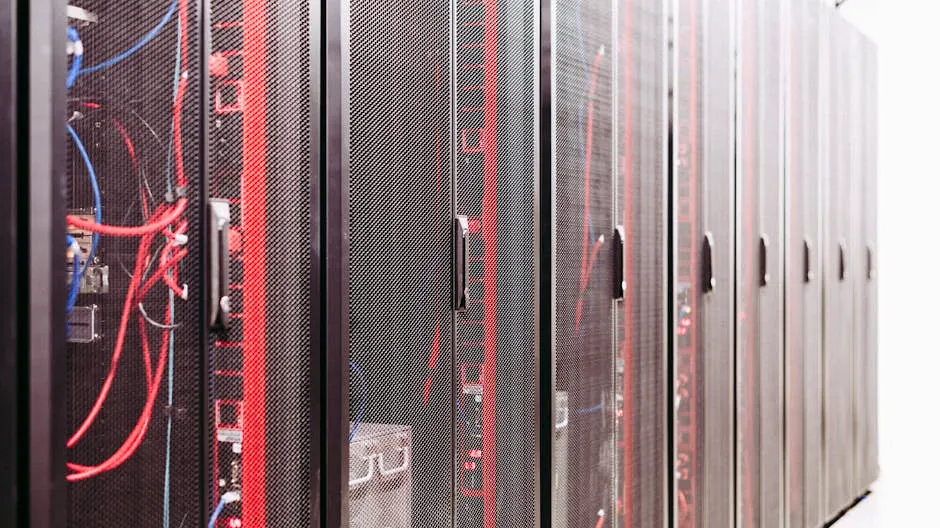

Uber deepens AWS tie: Trip Serving moves to Graviton4, Trainium3 pilot sets the next benchmark
Uber has moved key real-time services to AWS’s Graviton4 processors and begun piloting Trainium3 for model training, marking a deliberate shift toward AWS’s custom silicon to speed matching and cut energy use. This is a staged, operational choice—not just a cost play—and the Trainium3 pilot will be the immediate checkpoint for whether AWS’s chips can displace Nvidia GPUs for large-scale AI training.
Graviton4 now runs Trip Serving Zones
Uber has replatformed its Trip Serving Zones—the subsystem that must match riders and drivers within milliseconds—onto AWS Graviton4 CPUs to reduce latency during surge events and scale across demand spikes. Kamran Zargahi, Uber’s VP of Engineering, has framed the move around latency: at Uber’s transaction volumes, millisecond improvements compound into materially better matching and throughput.
Beyond latency, Uber cites energy efficiency and operational scaling as drivers: Graviton4’s ARM-based design is positioned to deliver better performance-per-watt than comparable x86 servers, which directly lowers cost and data-center electricity draw as ride and delivery volumes grow.
Trainium3 pilot: targeted training workloads, not an immediate GPU wholesale switch

Uber is trialing AWS Trainium3 chips specifically for training models used in arrival-time prediction, driver assignment, and personalization—workloads that ingest billions of events. Trainium3 is architected for high-cost-efficiency on large training jobs and is being evaluated as a cheaper alternative to Nvidia GPUs for those classes of models.
The pilot status matters: Uber is measuring throughput, model-convergence time, and total cost of training versus its existing Nvidia-based pipelines. The results—benchmarks on end-to-end training time, accuracy parity, and electricity consumed—will determine whether Trainium3 moves from pilot to production and influence other enterprises weighing AWS’s custom chips.
Supplier lock-in and operational risks are concrete trade-offs
Deepening reliance on AWS’s silicon tightens Uber’s alignment with Amazon’s vertically integrated stack and increases vendor lock-in compared with its past mix of Oracle, Google Cloud, and on-premises resources. That alignment buys tighter hardware-software co-optimization but also concentrates execution risk: any performance variability on Trainium3, or a slow porting path for model tooling, would ripple through Uber’s real-time and ML pipelines.
Competitors aren’t standing still—Google and Microsoft continue developing custom accelerators and software hooks—so Uber’s move is strategic but contingent. The company’s cautious posture—running Trainium3 as a pilot rather than a blanket replacement—acknowledges migration complexity, software compatibility needs, and the possibility that Nvidia’s GPU ecosystem retains advantages in maturity and breadth of ML tooling.
Comparing options and what to watch next

| Chip / Role | Primary strength | Caution or constraint | Maturity / availability |
|---|---|---|---|
| Graviton4 (AWS CPU) | Low-latency, energy-efficient inference and general compute for Trip Serving | Requires ARM-optimizations in software stack | Widely available on AWS; adopted by major customers |
| Trainium3 (AWS accelerator) | Cost-effective large-scale training when optimized | Pilot-stage for many workloads; tooling and parity vs GPUs vary by model | Newer; available via AWS but adoption still expanding |
| Nvidia GPUs | Ecosystem maturity, broad ML framework support, high throughput | Higher capital and operational energy costs per unit work | Industry-standard for most large-model training today |
The immediate decision lens for Uber and similar enterprises should focus on three measurable checkpoints from the Trainium3 pilot: (1) wall-clock training time to reach parity for key models; (2) total cost of training including instance-hours and energy; and (3) integration friction—how much code or tooling change is required to reach production. Positive results on those three will materially shift the economics in AWS’s favor.
Quick Q&A
When will we know if Trainium3 is ready? Expect public or partner benchmark signals after Uber’s internal pilot completes—watch for published performance comparisons and any uptime or convergence data in the next set of engineering updates or conference talks.
Is this primarily about saving money? No. Cost and energy savings are explicit goals, but the move is equally about improving millisecond-level latency in Trip Serving and enabling scale by pairing hardware with AWS’s software stack.
Does this mean Nvidia is out? Not yet. Nvidia remains the default for many training workloads because of tooling and ecosystem maturity; Trainium3’s adoption depends on pilot benchmarks and whether enterprises find the migration friction acceptable.
